Before the Last
Voice Fades

𑚞𑚫𑚌𑚦𑚭𑚪𑚯 — Preserving Pangwali

A language documentation project recording the phonetics, vocabulary, and living oral tradition of Pangwali — an Indo-Aryan language spoken by fewer than 18,000 people, classified as Critically Endangered by UNESCO.

Endangered Languages Project — Pangwali (lang/4961)
Scroll

UNESCO Classification: Critically Endangered — The youngest speakers are generally grandparents. Without urgent action, Pangwali will be lost within a generation.

UNESCO Atlas of the World's Languages in Danger, 3rd ed. (Moseley, 2010)

A tongue older than
the roads that reach it

Pangwali is an Indo-Aryan language native to the Pangi Tehsil of Chamba district, locked inside one of the most remote valleys in the Indian Himalaya. Natively written in the ancient Takri script — the same script carved into temple walls and royal inscriptions across Pangi — it is a living linguistic fossil of remarkable depth.

The valley sits between the Pir Panjal and Zanskar ranges at an altitude of over 11,000 feet. For months each winter, when Sach Pass closes under six feet of snow, Pangi is completely cut off from the world. This very isolation preserved Pangwali for centuries — but now the roads that finally arrived are carrying the language away.

The Sach dialect, spoken in the pargana historically centred at Sach village, is considered the most conservative — closest to Sanskrit root forms, the most phonetically distinct, and the most at risk as younger speakers migrate toward Hindi and urban centres.
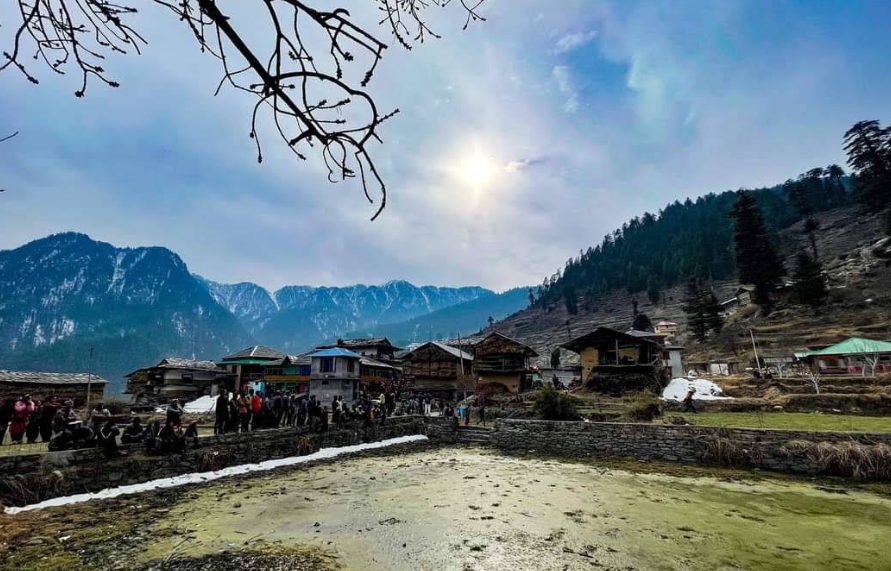
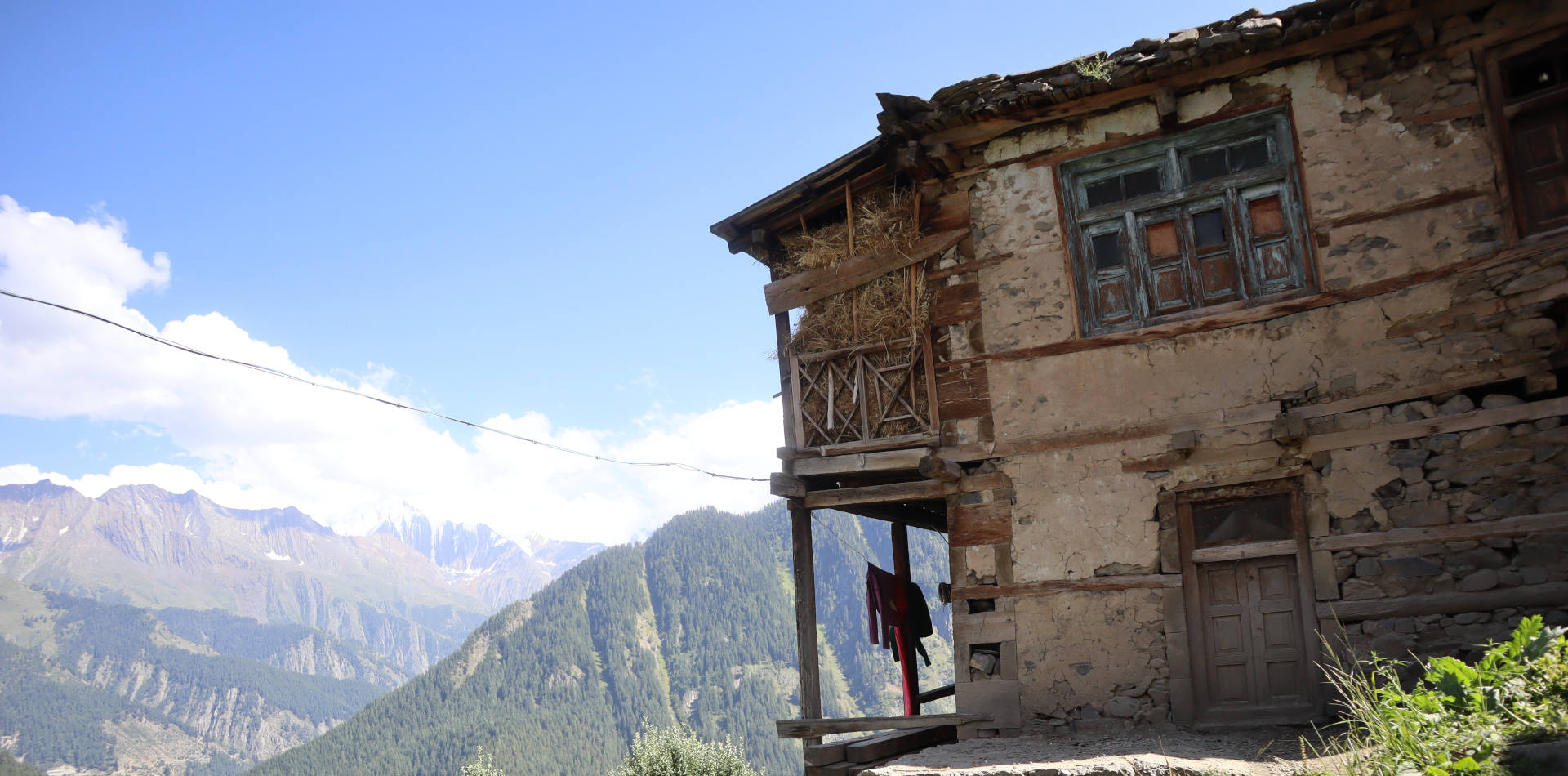
📍 Primary Field Site — Sach Village, Pangi Tehsil

Sach · Killar · Purthi · Dharwas · Pangi Tehsil

Open in Maps ↗
~18,640 Speakers (2011 Census) Census of India 2011
4 Dialects: Killar, Purthi, Sach, Dharwasi Wikipedia — Pangwali
90% Mutual intelligibility with Padderi Ethnologue — ISO pgg
1600 km² Geographic range, Pangi Valley Wikipedia — Pangi, HP

The Crisis

Why Pangwali is
dying — and why it matters

"When a language dies, a unique way of seeing the world dies with it — its metaphors, its stories, its knowledge of this land accumulated over centuries. Pangwali carries knowledge of the Himalaya that no other language holds."

📉

Political Erasure

Pangwali is officially recorded as a dialect of Hindi — despite having poor mutual intelligibility with it. This classification denies the language constitutional recognition and government support, cutting off any path to official status or education in the mother tongue.

🏔️

Isolation Turned Exodus

The very roads that ended Pangi's centuries of isolation are now carrying young speakers to cities. As infrastructure improves, economic migration accelerates. Children who leave for school in Chamba or Shimla return speaking Hindi, not Pangwali.

📚

No Education in the Language

There are no schools teaching in Pangwali. No textbooks, no official dictionaries, no standardized script in use. Children are taught entirely in Hindi, creating a generation that understands but cannot read, write, or pass on their mother tongue.

👴

Aging Speaker Base

UNESCO's own assessment: the youngest fluent speakers are generally grandparents. Intergenerational transmission has already broken down in most families. The language is no longer being learned as a first language by children in urban-adjacent areas.

📝

Near-Zero Documentation

Since Grierson's Linguistic Survey of India in the early 20th century, only one grammar of Pangwali has been published — in Hindi, by Binaya Sundar Nayak. The Sach dialect has virtually no systematic phonetic documentation at all.

🌍

Unique Linguistic Heritage at Stake

Pangwali preserves archaic Sanskrit phonology, vowel harmony patterns found in Kashmiri, and lexical forms shared with Bhadarwahi and Padderi. The Sach dialect is described as the most conservative — a window into proto-Western-Pahari that no other living variety preserves.

"The youngest speakers of Pangwali are generally grandparents or older, and they speak it infrequently or only partially."
— UNESCO Atlas of the World's Languages in Danger
unesdoc.unesco.org — pf0000192416

Focus: Sach Dialect

The most conservative voice —
closest to the source

Among the four dialects of Pangwali, the Sach dialect — spoken in and around the Sach pargana — is linguistically the most remarkable. Described as the most conservative in relation to Sanskrit, it preserves phonological and lexical features that have been lost in Killar (the prestige dialect), Purthi, and Dharwasi. It is also, arguably, the most underdocumented.

Sanskrit Conservatism

The Sach dialect retains archaic consonant clusters, retroflex distinctions, and lexical items that directly trace back to Sanskrit root forms — features that the more-contacted dialects have simplified or lost entirely.

Wikipedia — Pangwali (Sach dialect, Dialects section)

Vowel Harmony System

Pangwali exhibits a fossilised vowel harmony system — similar to Kashmiri — where historical conditioning vowels that triggered harmony have often been lost, making the system no longer productive but still phonologically traceable in Sach.

Wikipedia — Pangwali (Phonology section, citing Nayak grammar)

Geographic Isolation

Sach village sits in one of the three historic parganas of Pangi, separated even within the valley by seasonal road closures. This double isolation — from the world and from Killar — has preserved features that contact has eroded elsewhere.

Census of India 2011 — Pangi Tehsil, village-level data

Takri Script Inscriptions

The state kothi at Sach bears Takri inscriptions recording the foundation by Raja Ugar Singh in 1725 CE. The dialect spoken around these inscriptions is the same community that preserved this script tradition longest — and is now losing it fastest.

Wikipedia — Takri script (Pangi inscriptions)

Field Data

Linguistic Reality —
structure, shift, and loss

🟢 Stable (Core Pangwali)

मेरा नाम मंजीत कुमार है

मौ नौ मंजीत कुमार अस्तु

Pattern identity → noun + अस्तु
है → अस्तु (Sanskrit root form → अस्)
Interference Low — core structure intact

मेरे गांव का नाम धनाला है

म ग्रां नौ धनाला अस्तु

Pattern pronoun reduction → “मेरे” → “म”
मेरे → म
Likely reduction from मम (my) → m-type contraction
Interference Low — strong dialect retention

🟡 Transitional (Language Shift)

वो खाना खा रहा है

सै रोटी खैण लगुरा

Pattern progressive → लगुरा
Interference Medium — Chambyali influence

हम घर में पंगवाली भाषा बोलते हैं

अस गै पंगवाली भाषा बतै

Pattern lexical replacement
हम → अस “बोलते हैं” → “बतै”
Interference Possible relation to अस्मद् (we) root
but evolved form, not direct

🔴 Weak (Heavy Hindi Influence)

मैं गांव धनाला से हूं

मैं ओं धनाला ग्रां कना अस्ता

Pattern case marker → कना
Interference High — Hindi + Pangwali mix

क्या तुम बाजार जाओगे

क्या तू बाजार चलता

Pattern Hindi sentence structure retained
Interference High — weak dialect usage

What we are
building & recording

A planned archive of the Sach dialect — built from the ground up using field recording, phonetic transcription, and community collaboration. Below is what the documentation will produce.

🎙️

50+ Hours of Audio / Video

Field recordings of natural speech, storytelling, songs, and ritual language — with a focus on Sach dialect speakers across age groups.

📖

Phonetic Documentation

IPA transcription of the Sach dialect's phoneme inventory, vowel harmony patterns, consonant clusters, and tonal distinctions.

🗂️

Vocabulary Dataset & Translations

A structured lexical dataset with Pangwali–Hindi–English translations, semantic domains, and grammatical annotations.

🌐

Open Digital Archive

All materials deposited in an open-access archive (ELAR / ELP) for researchers, communities, and future revitalization efforts.

🏘️

Community-Driven

Recordings conducted with and for the Pangwali-speaking community — not just about them. Community members co-create the archive.

A proposed three-phase
field plan — 4 months
Phase 1 · Months 0–1
Community Access & Scoping
Build trust with Sach village elders and families
Identify and recruit 30–45+ fluent speakers across age groups
Obtain informed consent; establish recording protocols
Pilot audio/video equipment in Himalayan field conditions
Map recording sites across Pangi Tehsil
Phase 2 · Months 1–3
Field Recording & Transcription
Structured elicitation — wordlists, paradigms, minimal pairs
Naturalistic recordings: conversation, narrative, song
Capture ritual and ceremonial language where permitted
IPA transcription and time-aligned annotation in ELAN
Build Pangwali–Hindi–English lexical dataset
Phase 3 · Months 3–4
Archiving & Community Return
Deposit all materials to ELAR / ELP open-access archive
Return community copies — USB drives, printed wordlists
Co-review archive with speakers for accuracy and consent
Submit findings report to ELP and academic channels
Projected targets upon completion
50+ Hours of recordings
45+ Speaker participants
1,200 Lexical entries

Field work has not yet commenced — all figures are projected targets. This project is actively seeking funding and has been in contact with the Endangered Languages Programme. If you can support or point us toward grants, please get in touch.

Karun —
reaching out for collaboration

This project is in active development and is seeking funding to begin field work. We have been in contact with the Endangered Languages Programme and are exploring other grant sources. If you are a researcher, linguist, institution, or potential funder interested in supporting this work — or if you speak Pangwali and wish to participate in recordings — please get in touch.

The archive will be open-access and community-owned. Speaker rights and consent are central to the methodology.

🌐 In contact with: Endangered Languages Programme · ELP
ISO pgg Language Code
pang1282 Glottolog ID

Powered by Formspree

References & Sources

Every claim on this site is
sourced & verifiable

All data drawn from official government records, peer-reviewed linguistic surveys, and UN documentation.

01 · Speaker Population

18,640 speakers (Himachal Pradesh) + 27 in Nagaland + 1 in Manipur.

↗ Linguistic Survey of India — Himachal Pradesh (Govt. of India, 1995–2008)
↗ Census of India 2011 — Office of the Registrar General

02 · UNESCO Critically Endangered Status

"Youngest speakers are grandparents or older, speak it infrequently or partially."

↗ UNESCO Atlas of the World's Languages in Danger — Indian Culture Portal
↗ UNESCO Atlas, 3rd Edition (Moseley, C., ed., 2010) — UNESCO Digital Library

03 · Grierson's Linguistic Survey (Historical)

3,701 speakers estimated at the time of the original survey. Pangwali initially recorded as a dialect of Chambeali.

↗ Grierson, G.A. — Linguistic Survey of India, Vol. IX Pt. IV (1916) — Internet Archive
↗ Digital South Asia Library — LSI Full Volumes

04 · Mutual Intelligibility & Classification

90% with Padderi · 75% with Bhadarwahi · 44% with Chambeali · 24% with Mandeali · 22% with Kangri.

↗ Wikipedia — Pangwali (citing SIL Ethnologue & Nayak, B.S.)
↗ Glottolog 4.x — pang1282 (Max Planck Institute)

05 · Sach Village Population

608 people · 147 households — Sach village, Pangi Tehsil, Chamba District.

↗ Census of India 2011 — Village-level data, Pangi Tehsil

06 · Political Status & Hindi Classification

Pangwali recorded as a dialect of Hindi in official records despite poor mutual intelligibility. Eighth Schedule demand made by HP Vidhan Sabha in 2010.

↗ LSI Himachal Pradesh — Language Division, Office of Registrar General
↗ Indpaedia — Pahari Language (citing Census 2011 & LSI)

07 · Grammar & Phonology

Vowel harmony system, grammatical gender, fossilised phonology. Only one post-Grierson grammar published — Nayak, Binaya Sundar (in Hindi).

↗ Wikipedia — Pangwali (citing Nayak grammar & Grierson)
↗ SIL International — ISO 639-3 code: pgg

08 · Sach Dialect — Conservative Character

"Sach dialect is said to be the most conservative in regard to Sanskrit."

↗ Wikipedia — Pangwali (Dialects section)
↗ Kashmir Images — Grierson on Bhaderwahi & Pangwali (LSI Vol. IX Pt. IV)

All sources are publicly accessible. Census data © Office of the Registrar General & Census Commissioner, India.
UNESCO data © UNESCO 2010 (Moseley, C., ed.). Linguistic Survey data © Language Division, Govt. of India.